Participation in Construction
Smart collaboration to build a beautiful and profitable future
What is participation in construction?
Construction partnership contracts offer a valuable solution for owners of old or rundown properties to renovate without needing upfront cash. Instead of paying for construction, landowners contribute their land and receive a share of the new units.
This method has grown popular amid economic instability and inflation, easing financial pressure on property owners. However, success depends on understanding legal regulations and drafting clear agreements. Poorly written contracts or legal oversights can lead to serious disputes. It’s essential to be informed and cautious when entering such agreements.

What is a construction participation contract?
A construction partnership agreement is a legal arrangement where a landowner and a builder collaborate to develop a property. The landowner provides the land as capital, while the builder contributes construction services or funding. This joint venture allows both parties to share profits fairly, based on their contributions. It reduces financial risk for the landowner, improves construction quality, and makes better use of land. Beyond financial benefits, it also supports urban development and enhances infrastructure and living standards.
Terms of the construction participation contract
The following , taking into account the above points , presents the complete and basic terms of the construction participation contract. The terms of the construction participation contract should be structured in such a way that the interests and responsibilities of both parties owner and builder are clear and specific .
1. Details of the Contracting Parties
• Enter the full details of the owner or owners (including name, national ID number, address, and contact number).
• Enter the full details of the manufacturer or contracting company (including registration number, activity license, office address, and contact number).
2.Property and project specifications
•Complete property information including exact address, registration number, area and land use.
• Determine the legal status of the property (free, mortgaged, or subject to objections).
• Enter project specifications including type of construction, number of floors, units, and area of each unit.
3.Profit Sharing management
•Agreement on the parties’ share of the project (for example, 55% for the owner and 45% for the builder).
• Calculating the contribution based on the inflation rate and property value in the area.
•Precisely determining the units and floors assigned to each party and mentioning their details.
• Assigning common units or specific items (such as storage and parking).
4. Obligations of the owner
• Providing a property deed in the name of the project or mortgaging it if needed.
• Guaranteeing the resolution of potential legal problems or third-party claims regarding the property.
• Cooperation in obtaining permits if needed.
5. Constructive Obligations
• Financing construction costs (including materials, labor, permits, etc.).
• Providing a valid guarantee to ensure the fulfillment of obligations.
• Continuously informing the owner about the progress of the project at specific intervals.
• Payment of a gratuity to the owner before construction begins to cover the cost of temporary housing.
6. Guarantees and warranties
• Obtain a bank guarantee, surety check, or valid collateral from the manufacturer.
• It is recommended to use a bank check instead of a promissory note for greater security.
7. Project Timeline
• Determine the exact start and end times of the project.
• Definition of penalties for late project delivery.
• Determining responsibilities in the event of the death of the owner or builder and transferring responsibilities to the heirs or legal representative.
8. Dispute resolution and arbitration
• Appointing an arbitrator or arbitration panel to handle potential disputes.
• Including the arbitrator’s duties and powers in the contract.
• Designating a judicial authority for cases that cannot be resolved through arbitration.
9. Contract Termination Terms
• A precise definition of the circumstances that lead to the termination of the contract, such as failure to fulfill obligations by the parties.
• Determination of penalties or damages resulting from termination of the contract.
10. Reporting and representation
• Require the contractor to provide continuous reports and minutes of project progress.
• Possibility of appointing a representative from the owner to supervise the implementation of the project (inclusion of the representative’s name and replacement conditions in the contract).
11. Legal and financial issues
• Agreement on additional costs such as municipal fees, insurance, and taxes.
• Determining how to pay for the costs (in case of financial participation by the owner).
• Clarify how additional costs that may arise during the project will be divided.
12. Other important requirements
• Formally drafting the contract with the signature of witnesses at notary offices.
• Emphasize the credibility of the contractor company if choosing a law firm (through background and performance inquiries).
• Determining specific conditions in case the project remains unfinished at the end of the contract.
Before drafting and signing a contract, seek the help of a lawyer or legal advisor specializing in construction partnerships to ensure the accuracy and transparency of the contract clauses and to prevent potential problems in the future.

Participation in construction, mutual benefit!
This sharing of information and resources leads to reduced costs and improved project performance . This type of cooperation in the construction industry can provide both parties with opportunities to optimally utilize experience and financial resources and create a rational and sustainable development process . The owner of the land or old structure can agree with the builders how the construction costs will be divided and what portion of the new property will ultimately be his . On the other hand , Builders can also benefit from this collaboration because they save on land purchase and initial costs associated with constructing their own independent building , improving their investment opportunities .
Read on and follow along step by step . Participating in building construction is a complex , multi step process that requires careful planning and effective collaboration .
From A to Z in Construction Participation
Fresp Architectural Company , with years of experience and expertise in the construction industry , is ready to provide you participation services in construction .
If you own land or have a dilapidated property, don’t miss this golden opportunity! Contact us and benefit from free consultation from our experienced team of engineers.
However , entering into this contract requires full knowledge of the relevant laws , conditions , and legal requirements . Participating in construction , in addition to enhancing the value of your property , is an ideal opportunity to create a modern and durable building.
Our professional team will be by your side to provide specialized solutions and utilize up-to-date knowledge to carry out all stages of the partnership from design to implementation with precision and high quality.
At Fresp , we are committed to paying attention to every detail of the project , including drafting legal contracts , sourcing quality materials , engineering supervision , and meticulous execution .
Our goal is your satisfaction and turning your construction dreams into reality.
Fresp, your reliable companion on the path to building the future!
Contact us now and take the first step towards renovation and safe investment with confidence.

How to calculate participation in construction
The question usually arises as to how each party’s share of the new property is determined and what factors influence this division . In this type of contract , determining the owner’s and builder’s share depends on two basic factors . One of the main concerns in construction partnership agreements is how the percentages and profits of the parties to the agreement are calculated . Then , the costs of reconstruction , demolition , and construction are estimated to accurately determine the capital and contribution of each party . This valuation must be accurate and take into account the current price . First , the value of the property or land owned by the owner is determined .
Using their knowledge and experience , they correctly evaluate the assets and capital of each party and propose a fair division . To perform these calculations , professionals and experts are usually used .
Steps to participate in construction
- The first step is to assess the location of the land or property and make a fundamental valuation of it. This assessment will help you identify the strengths and weaknesses of the property and make better decisions.
- After that , a preliminary design is prepared , which should be done by taking into account the needs and desires of all parties . This design includes the technical details of the project and must be such that it is feasible .
- By having an accurate estimate of costs , you can better manage your financial resources and prevent financial problems . Next , estimating implementation costs is particularly important .
- Setting the terms of the contract and determining the parties shares is also a key step in this process . This will create more transparency among all partners and everyone will know what share of the property they have .
- Finally , obtaining the relevant permits from the legal authorities is essential to allow the construction process to begin smoothly . After completing all of the above steps , you are ready to begin the construction process and make your project a reality .
Fresp Company , with more than 10 years of experience in the field of construction , is ready to act as your ideal partner in construction projects . Flexibility and attention to detail are the principles of our team . Our professional team , with expertise and experience in the field of design and construction implementation , provides the best services . It is guaranteed that your projects will be completed with high quality and on time. Fresp Company uses its facilities and expertise to provide you with the best services.
The impact of inflation on construction participation contracts
Given the constant changes in costs and prices , it is necessary to fully consider these issues in the contract so that neither party suffers losses . The important point in this process is to pay attention to economic inflation and price fluctuations .
The agreement must not only guarantee the interests of the owner and the builder , but also provide ways to adjust prices based on economic conditions . For this reason , the construction participation contract must be drafted in such a way that all details are carefully considered . Transparency in valuation and fair consideration of price changes are among the most important principles that can lead to confidence and satisfaction for both parties .
Attention to detail and consideration of market conditions will prevent possible disputes in the future and will ensure a successful and profitable partnership for both parties . Finally , using legal advisors and economic experts can help to draft the contract in a way that all these points are properly observed and no ambiguous points remain .
Related Article: Construction Contract Management
30 Problems and Risks of Construction Participation Contracts
The most important risks of this type of agreement include failure to complete the project on time , changes in costs , legal issues related to ownership of the land or building , and disputes between the parties regarding the share of each partner . In these types of contracts , careful monitoring of the project implementation process and transparency in the regulation of contract clauses are of great importance to prevent legal and financial problems . Like any financial agreement , a construction partnership agreement carries risks .
Join us as we explore 30 common risks and problems in construction partnership agreements
1. Failure to specify the exact method of contract termination and its conditions
This can lead to project halts or waste of resources . If the contract does not include clear and specific termination conditions such as breach by one party or failure to fulfill obligations , when a problem arises , both parties may have claims that make the dispute resolution process lengthy and complicated .
2. The existence of partners or heirs who oppose the contract
These people may obstruct the process or even stop the project . If the land is owned by multiple owners or the original owner has passed away and has heirs who disagree with the contract , there are many legal problems that can arise .
3.Failure to anticipate increases in construction costs due to inflation or changes in material prices
If the contract does not specify how these cost increases will be covered , the builder may refuse to continue work or reduce the quality of the project . In Iran’s economic climate , inflation and rising prices for construction materials are very common .
4.Failure to determine the method of dispute resolution (arbitration or going to court)
This process can be time consuming and costly , and can stall the project . The lack of a clear mechanism for resolving disputes means that parties are forced to go to court for every minor issue .
5. Failure to specify ancillary costs such as licensing fees, insurance, and taxes.
If the contract does not specify which party pays these costs , serious disputes can arise . Sometimes , additional costs such as workers compensation , municipal taxes , or value added tax can be significant .
6. Disagreement over project management and control of construction stages
Inadequate oversight or disagreements in decision making can jeopardize construction quality and schedule . Without a clear project manager , coordination issues can arise between teams and contractors .
7. The existence of disputes or legal disputes over land or property.
If the property has legal issues , such as disputes or other legal claims , the legal authorities may not allow the project to begin or continue . This is usually time consuming and costly .
8.Unfair division of profits or units due to lack of transparency in the contract
Even the rial value of the units in different classes can be a source of tension . If the owner’s and developer’s share is not clearly and precisely specified in the contract , serious disputes may arise when the units are divided .
9. Failure to include a precise timeline for the different stages of the project
This increases incidental costs and may result in losses for the owners . Without a clear timeline for the start and end of each phase demolition , framing , finishing , etc . , the builder may delay the project .
10. Disagreement over how to sell or rent the project units after completion
Sometimes the parties intend to sell or rent out some of the units, but if this is not specifically stated in the contract, the developer or owner may act as they please and ignore the interests of the other party.
11.Failure to anticipate changes in the original design (adding or removing spaces)
During the project implementation, the original design may change due to reasons such as new needs or technical limitations. If the contract does not foresee which party is responsible for deciding on these changes and how the costs will be divided, disputes and project halts may occur.
12. Disputes over the selection of subcontractors or suppliers
If it is not clear who (owner or builder) selects subcontractors and suppliers, this can lead to disputes over the quality of work, costs, or responsibilities.
13. Failure to officially register the contract with legal authorities
If the contract is not notarized, the parties may not be able to prove their rights in court. This can lead to legal problems and false claims.

14. A difference in determining the rial value of the parties’ shares at the time of project delivery
The value of the units at the time of delivery may vary due to location, class, or market conditions. If the contract does not specify how the rial value is calculated and divided, many disputes will arise between the parties.
15. Failure to anticipate unforeseen costs such as damages caused by accidents
Unforeseen events such as theft , fire , or damage to the structure may impose additional costs on the project . If the contract does not specify who will pay these costs , financial problems and disputes will arise .
16. Lack of independent monitoring of project quality and progress by a third party
An independent supervisor can ensure that the work is progressing according to standards and on schedule . Failure to use an independent supervisor may result in poor construction quality or project delays .
17. Constructive violation of the agreed plan or approved drawings
If the builder deviates from the original plan without coordinating with the owner (such as changes in the number of floors or unit sizes), legal problems and dissatisfaction between the parties may arise.
18.Negligence or evasion of obligations by the parties after receiving their share
This can leave the project unfinished or affect the final quality . One party may renege on remaining commitments after receiving their share such as specified units .
19. Failure to determine how the project will be financially managed (joint or dedicated account)
Having a joint account with transparent management can prevent these problems . Lack of transparency in financial matters , such as how expenses are paid , can lead to misunderstandings and disputes .
20. Disagreements in the choice of architecture or final design of the project
This often causes project delays . The differing tastes of the owner and the builder may lead to disagreements over the final design of the project such as the building facade , type of materials , or architectural style .
21. Disagreement over payment of legal fees such as municipal fees
If the contract does not specify who is responsible for paying municipal fees , taxes , and other legal fees , the parties may refuse to pay and the project may be halted .
22. The manufacturer becomes a bank debtor due to inability to repay the loan.
If the developer has taken out a loan to finance the project and is unable to make the payments , the bank may seize the project’s properties or assets , which will cause the project to stall .
23.Dispute in determining a replacement manufacturer in the event of the withdrawal or inability of the original party
If the builder is unable to continue work for any reason and the contract does not specify how a replacement builder should be selected , the project may be stalled for an extended period of time .
24. Problems in registering the final ownership document of the units
If the title deed registration process for completed units is not specified, the owner or developer may face legal and regulatory issues that delay final delivery.
25. Lack of sufficient guarantees from the manufacturer (check, promissory note or collateral)
Warranties such as checks or bonds can largely prevent these problems . If the builder does not provide an adequate warranty , the owner will be vulnerable to violations or negligence on the part of the builder .
26. Failure to consider insurance for the project and its risks
Otherwise , the damages resulting from these events can cause serious problems for both parties . It is essential to insure the project against unforeseen events such as earthquakes , fires , or workplace accidents .
27. Problems in transferring the property title to the builder at the end of the project
This should be provided for in the contract . If the owner refuses to transfer the title to the builder for any reason , the builder may not be able to legally receive his share .
28. Disagreement over project name and branding
Disagreements over this issue can lead to delays in selling units . In larger projects , the choice of project name or brand is of great importance for marketing and sales .
29. Failure to foresee how to compensate for damages in the event of project suspension
If the project is stopped for any reason such as financial or legal problems , the contract should specify who is responsible for compensation and how this compensation is calculated .
30. Problems caused by interference from the municipality or other government organizations
If these issues are not foreseen in the contract , it will cause great damage to the parties . The municipality or government agencies may stop the project for reasons such as changing laws , violations in obtaining permits , or legal problems .
List of materials and supplies for the construction participation contract
The list of materials in a construction participation contract goes beyond a simple list and plays a key role in clarifying the project implementation stages and preventing potential disputes .
Also , the exact amount of materials required , quality , and brand of each product are specified separately and agreed upon by the parties . This list includes all construction steps , implementation details , and how to perform them , along with the technical specifications of each floor .
This part of the agreement is very important , because any ambiguity or lack of transparency in the selection of materials and implementation method can lead to serious disputes and even the halting of the project .
Unfortunately , in many cases , people pay more attention to the appearance and architectural aspects of a building and neglect the importance of agreeing on materials and their quality .
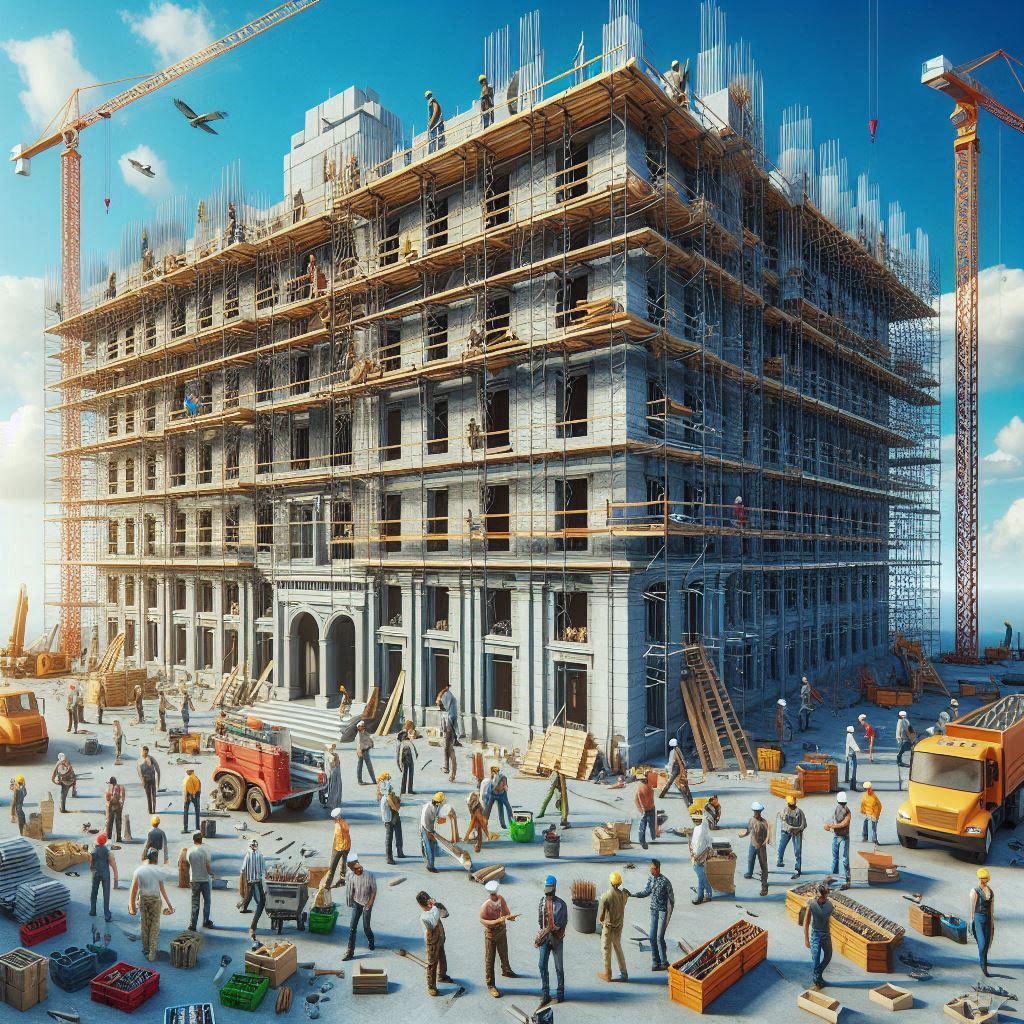
This transparency prevents problems such as the use of poor quality materials or sudden changes in brands . This list should fully specify items such as the number of floors , technical details of each floor , the exact amount of materials required , and the agreed brands so that there is no ambiguity . The materials list not only serves as a detailed execution plan , but also ensures the final quality of the construction .
Paying attention to these points will ensure the success of the project and the satisfaction of the parties . In the rest of this article , we will explain to you other key points that you should consider when preparing this list .
The importance of the materials list in the construction participation contract and its impact on project quality
This list will not only guide the implementation of the project , but will also determine the quality of the important and essential parts of your building . Every construction project has its own unique characteristics , features , and challenges , and one of the essential steps in its success is to clarify the materials required . For this reason , it is of great importance to prepare an accurate and transparent list of materials and supplies in the construction participation contract .
For example, the type of building frame is one of the important decisions that must be made on this list; will the structure be made of steel or concrete?
These decisions can have a significant impact on the durability , strength , and cost of the project . Another important consideration is the type of roof that the building will be constructed of , such as whether the roof will be a block joist , concrete slab , or steel deck .
What type of ventilation system , package , or chiller the building uses will have a direct impact on the building’s comfort and efficiency . Additionally , details regarding electrical installations , plumbing , and even the building’s heating and cooling systems must be carefully specified in the bill of materials .
One of the most important points in preparing this list is to accurately state the brand of all materials . It is recommended to specify at least three suggested brands for each item so that if a brand is unavailable due to sanctions or import problems , suitable alternatives can be determined in advance . This approach maintains transparency in the contract and prevents any abuse or disputes between the parties . However , the manufacturer must provide compelling reasons why the first brand was rare or unavailable and why the second or third brand was substituted .
Transparency in this part of the contract not only ensures the quality of construction , but also prevents possible disputes in the future . Under no circumstances should phrases such as similar brands be used in the materials list , as this phrase can lead to disputes and misunderstandings between the parties .
Another point is that no professional builder is willing to use substandard or low quality materials . Buildings built with substandard materials usually have a lower value compared to similar properties in the area . Because using such materials not only reduces the quality of the structure , but can also negatively affect the final value of the property . Also , using low quality materials can question the builder’s credibility and reduce trust in future projects .
Given the embargo conditions and the high cost of foreign materials , it is recommended that builders use first class Iranian materials instead of imported ones . Finally , it should be noted that the difference in the price of materials is negligible compared to the total value of a quality project . Therefore , investing in quality materials is of great importance . This will not only avoid problems with material supply , but will also help reduce costs and facilitate the construction process
Paying attention to these points will guarantee the success of the project and the satisfaction of all parties . These people can provide detailed guidance and help you choose the best materials and implement the project correctly . If you are not familiar with the construction process and the type of materials , we recommend that you seek the help of a professional consultant or expert in this field .